-
 Feeling
 A loop that slowly shifts from control to surrender.
-
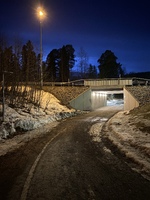 I walked through this tunnel to buy food
 We’ve been down many paths in the last year or so, and we continue to come across them. They seem familiar yet they are a completely different path. Whatever is at the end of the tunnel is not necessarily what we expect. I guess this is both frustrating and satisfying….
-
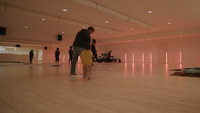 Creative Circuit
 Creative Circuit training inspired from the scores of tier 15.
-
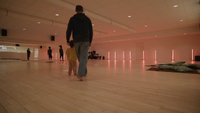 Creative Circuit Training
 Exploring the idea of a creative circuit training inspired by the scores presented in this tier.
-
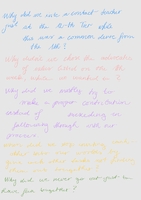 Question to think of still before we work next yea
 This week, I began summarizing how we’ve been working together—what has been challenging for us and how we’ve responded to those challenges, with a primary focus on group dynamics.
The process is still ongoing, and I haven’t finished yet. So far, a number of important questions have emerged. I think it would be valuable for us to explore them before we begin working on the piece.
-
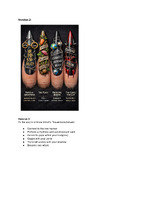 Tier 15- draft score- page 3
 Tier 15- draft score- page 3
-
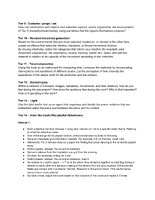 Tier 15- draft score- page 2
 Tier 15- draft score- page 2
(As mentioned in starter)
-
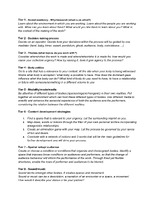 Tier 15- draft score- page 1
 Tier 15- draft score- page 1
(As mentioned in starter)
-
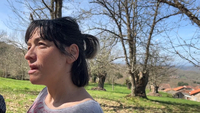 Aristóteles and Trees (Excerpt from Cinema Device)
 Excerpt from one of the improvisations following Cinema Device (a practice proposed by Nacho Cárcaba). Directed by Mónica García. Cameramen: Nacho Cárcaba and Bal Castro. Movers: Manuel Martín and Alba Fernández.
-
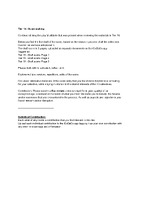 Starter Tier 15 Open / Score making
 This is the instruction page
-
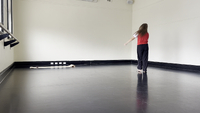 Swing into state of flow
 My most memorable individual experience through out these weeks happened on week 6 (content development strategies), when we explored method of “doing something else”. It has stayed with me ever since. It helps me to enter state of flow and remember what I have forgotten.
While “doing something else” on week 6, I cycled to an old park, listened to the podcast, talked to the gardener and swung in the swings, and I remembered about Latvian mantra “līgo”* I started to explore this concept through swing motion. In the video you can see a small bit of 20 min session where I revisit this movement after months.
Tingling in the finger tips. Transformation. A to B is actually circle if you let go enough. Being out of balance balances me. Happiness. Recourse to stay longer.
LĪGO, LĪGO! 🌱
*Līgo is a central Latvian mantra, refrain, and exclamation used during the Midsummer celebration. It is derived from the Latvian verb “līgot”, which means "to sway," "to swing," or "to bend". This reflects the natural movement of trees in the wind, crops in the field, or the cyclical swaying of life itself.
-
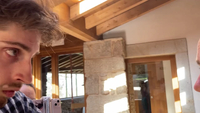 Honey body and glances
 Directing this cinema device proposition in which 6 people take diferent roles: 1 director, 2 performers, 2 cámaras and 1 text player.
In this exercise, i focus on eye contact and eyes travelling.
-
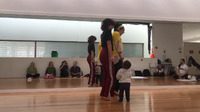 Unexpected trio
 The unexpected trio emerged from our proposal to work with improvisation and instant composition around the task number 8 , where we came together with Anna , from Wales collective , and my daughter Ayango
-
 Behold My. Hold the power, that’s left.
 Inspired by Anne Imhof’s songs, I’ve created an excerpt that erupted from me watching her exhibition
-
 Tier 14 - fuck marry kill - pdf
 A pdf describing the process of Latvian collective in the week 14
-
 Non-Hierarchical Groups and Power
 This text explores the dynamics of non-hierarchical groups, focusing on collaboration, collective responsibility, and the hidden power structures that emerge. It examines peer ostracism—exclusion by equals—and reflects on how understanding these processes can inform inclusive practices and effective group functioning.
-
 Tier 14 - Choices, Practices and Results
 In this document you can find the motivation, the process, and the results of the work of the Portuguese and Welsh collectives during Tier 14.
-
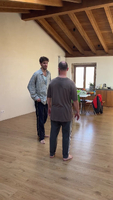 Movement generation
 Creating a choreography that fills the gaps created by the other person's body
-
 Collective Contribution | Tier 14 - Joker
 The Portuguese collective contribution for Tier 14, where we reinvented some of the previous tiers.
-
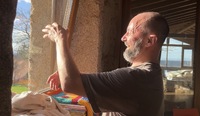 Angélica
 Photo from the Alba Fernández Cotelo practice about sound body affection. Character created in this improvisation
-
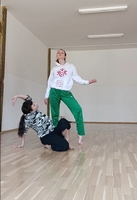 Catwalk
 Shot from a video of me and Jitka doing catwalk in one of our improvisations
-
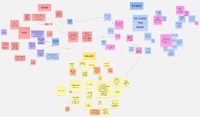 FEARS/DESIRES/VALUES on the collective work_FORGÓ
 The collective contribution of the Hungarian Forgó Collective on the tier14 (Joker)
-
 Wales - Playful Disturbance
 Wales
Images from week Playful Disturbance
Push to move vocabulary
-
 Playful disturbance - Wales
 Reflections on our week Playful Disturbance
Jo Anna and Deb
-
 FEARS/DESIRES/VALUES … description
 Description of the process of the 14th Joker Tier of the Hungarian Forgó Collective and how we got to the collective contribution titled FEARS/DESIRES/VALUES on the collective work.